By Dr. Noémie Hofman, DVM, CertAqV — WAVMA Certified Aquatic Veterinarian, Dubai
If you have fish in Dubai and something has gone wrong, you have probably already discovered how difficult it is to find a vet who genuinely knows what they are doing with aquatic patients. Most veterinary clinics in the UAE see cats and dogs. Some will occasionally see birds or rabbits. Aquatic medicine requires a completely different skill set and a specific certification that is rare anywhere in the world. In Dubai, there is currently one WAVMA certified aquatic veterinarian.
This post explains what a qualified fish vet in Dubai actually does, what WAVMA certification means and what you can expect from an aquatic veterinary consultation. If your fish is unwell right now and you need to get in touch, head to the contact page.
Do Fish Actually Need a Vet?
The short answer is yes, and the longer answer is that fish need a vet more carefully chosen than almost any other pet species.
Fish are prey animals with an evolutionary drive to hide illness. By the time behavioural or physical changes become obvious to an owner, the underlying condition is often well established. Early intervention makes a significant difference to outcomes in fish medicine, just as it does in any other species. The difference is that the window between a fish appearing normal and a fish being critically unwell is often very short.
Fish also live in an environment that is entirely under their owner’s control. Water temperature, pH, ammonia levels, nitrite, nitrate, dissolved oxygen, salinity, filtration; every one of these parameters directly affects fish health. A fish vet does not just examine the animal. We assess the entire system the animal lives in. The environment is part of the diagnosis.
What Is a WAVMA Certified Aquatic Veterinarian?
WAVMA stands for the World Aquatic Veterinary Medical Association. The CertAqV, or Certified Aquatic Veterinarian credential, is the only internationally recognised certification in aquatic veterinary medicine available globally. It is awarded to veterinarians who have demonstrated clinical competency across nine core areas of aquatic animal health including fish physiology, water quality, aquatic diagnostics, anaesthesia, surgery, and disease management.
Obtaining the CertAqV requires submitting a detailed record of clinical knowledge, skills, and experience across all nine core areas, verified by a mentor who is themselves a certified aquatic veterinarian, and reviewed by the WAVMA Credentialing Committee. It is not a weekend course. It is a rigorous credential that takes years of dedicated aquatic veterinary work to qualify for.
Dr. Noémie Hofman is the only WAVMA Certified Aquatic Veterinarian practising in Dubai.
What Does a Fish Vet Consultation Involve?
An aquatic veterinary consultation is different from a standard small animal appointment in several important ways. Here is what the process looks like.
History and environment assessment
Before examining the fish, a detailed history is taken covering the setup, the water parameters, feeding regime, how long the fish has been showing signs, what has changed recently in the tank or pond, and what treatments if any have already been attempted. In aquatic medicine, this history is as diagnostically important as the physical examination itself.
Water quality analysis
Water is tested for the key parameters that affect fish health. pH, ammonia, nitrite, nitrate, temperature, and salinity for marine species. Poor water quality is the underlying driver of a significant proportion of fish disease presentations. Treating the fish without addressing the water is treating the symptom without the cause.
Physical examination
Fish are examined for external abnormalities including scale condition, fin integrity, eye clarity, skin lesions, abnormal swimming posture or buoyancy, and gill appearance. Where indicated, the examination is conducted under sedation to allow a thorough assessment without stress to the animal. Sedation in fish is a routine and safe procedure when performed by a qualified aquatic veterinarian.
Diagnostics
Depending on the clinical picture, diagnostics may include skin scrapes and gill biopsies for parasite identification, blood sampling for haematology and biochemistry, cytology of lesions, imaging including ultrasound and radiography, and bacterial culture with sensitivity testing. The diagnostic approach is determined by the individual case, not by a standard template.
Treatment and surgery
Treatment options in fish medicine include medical management with antiparasitic, antifungal, or antibiotic therapy, surgical procedures under general anaesthesia including tumour removal, coelomic surgery, and wound repair, and environmental correction to address underlying water quality or husbandry issues. Fish surgery is a specialised field. Not every vet is trained or equipped to perform it safely. It is a routine part of aquatic veterinary practice for a WAVMA certified aquatic vet.
Which Fish and Aquatic Species Are Seen?
Aquatic veterinary medicine covers a wide range of species. The following are commonly seen in Dubai:
- Freshwater ornamental fish including goldfish, tropical community fish, cichlids, and bettas
- Marine and reef fish
- Koi and ornamental pond fish, including high-value collection fish
- Axolotls
- Aquatic turtles and terrapins
- Amphibians including frogs and salamanders
Dubai has a significant population of serious koi collectors with high-value fish that represent a substantial financial and emotional investment. These fish require the same level of qualified veterinary attention as any other valuable animal.
Why Is Finding a Fish Vet in Dubai So Difficult?
Aquatic veterinary medicine is a genuinely specialised field that receives very little attention in standard veterinary training. Most veterinary graduates complete their degree with minimal exposure to fish medicine. Developing genuine expertise in aquatic species requires years of dedicated postgraduate clinical work and in the case of the WAVMA CertAqV, a formal credentialing process.
The result is that most veterinary clinics in Dubai and across the UAE are simply not equipped to provide qualified fish veterinary care. Some will attempt to see fish patients with general small animal knowledge. This is not the same as seeing a WAVMA Certified Aquatic Veterinarian. The difference in diagnostic accuracy, treatment approach, and clinical outcomes is significant.
If you have been told there are no fish vets in Dubai or that nothing can be done for your fish, that is no longer accurate. There is now a WAVMA Certified Aquatic Veterinarian available in Dubai with the training, the equipment, and the clinical experience to genuinely help.
When Should You Contact a Fish Vet?
The following signs in your fish warrant prompt veterinary attention:
- Changes in swimming behaviour including listing, floating at the surface, or sinking to the bottom
- Loss of appetite lasting more than two to three days
- Visible lesions, ulcers, or unusual growths on the body or fins
- Rapid or laboured gill movement
- Abnormal colouration or patches on the skin
- Swelling of the abdomen
- Eye changes including cloudiness, protrusion, or bleeding
- Multiple fish in the same system showing signs simultaneously, which suggests an environmental or infectious cause
The earlier a problem is identified, the more treatment options are available and the better the prognosis. Fish are robust animals when their needs are met correctly. A condition caught early is almost always more manageable than one that has been progressing undetected.
About Dr. Noémie Hofman, WAVMA Certified Aquatic Veterinarian Dubai
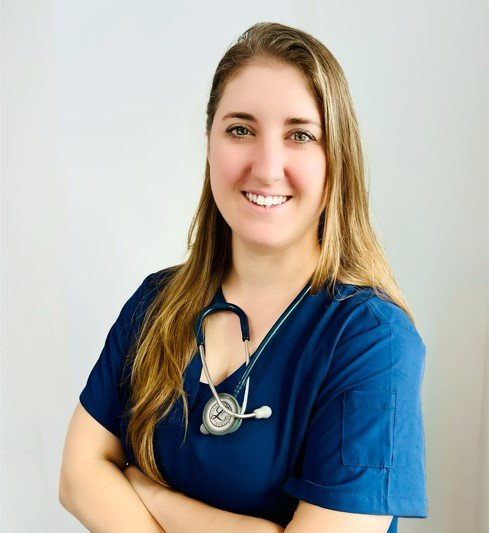
Dr. Noémie Hofman holds the DVM degree and the WAVMA CertAqV, the internationally recognised certification in aquatic veterinary medicine awarded by the World Aquatic Veterinary Medical Association. She is MOCCAE licensed and the only WAVMA Certified Aquatic Veterinarian practising in Dubai.
Her clinical background spans nearly a decade of wildlife, exotic and aquatic veterinary practice, with experience treating freshwater and marine fish, koi, axolotls, aquatic turtles, and amphibians alongside companion exotic species including rabbits, parrots, reptiles, and small mammals. Her wildlife experience includes lions, elephants, rhinoceros, dolphins, and sea turtles across multiple continents.
She holds a Master in Conservation Medicine, and is currently completing further advanced qualifications in exotic and zoological animal medicine.
If your fish needs veterinary care or you have concerns about your aquatic setup, get in touch through the contact page.